The 10 largest global food crises 2026
Data and evidence from the world’s most severe food crises.
Explore our work around the world, our annual reports and our organisational policies.
Data and evidence from the world’s most severe food crises.

As hunger and humanitarian conditions worsen in places like Gaza and Sudan, this toolkit provides a brief overview of how conflict and violence can impact food and nutrition insecurity, and outlines practical actions that key actors – from governments to multilateral institutions and parliamentarians – can take to help reverse the devastating rise of conflict-driven hunger and malnutrition.
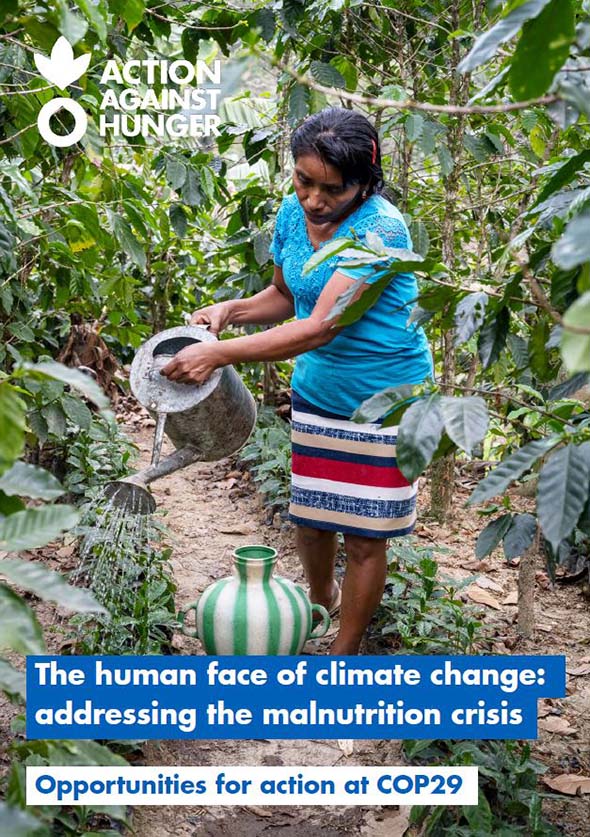
Opportunities for action at COP29.

This report summarises the key outcomes of the Preventing Hunger in Conflict Regional Dialogue Series, four one-day events which took place between July 2023 and January 2024 in the key regional hubs of Nairobi, Panama, and Dakar. A fourth online event also addressed the situation in the Middle East. The series was organised by Action Against Hunger, Oxfam, Save the Children, WFP and World Vision.

Violence and the world's largest displacement crisis leads Sudan to hunger and malnutrition.

Our analysis shows that globally, only 36% of appeals for water- and sanitation-related funding were met in 2023, leaving a 64% gap.

Results from this analysis suggest the nutrition situation of women and children in Gaza is worsening everywhere, but especially in Northern Gaza and Rafah. In Northern Gaza, 1 in 6 children are acutely malnourished, with an estimated 3% facing the most severe form of wasting and requiring immediate treatment.

The global hunger funding gap has hit 65% for countries with the most urgent needs.

Our call to action on the climate crisis for governments at COP28.

Despite the international community’s Sustainable Development Goal (SDG) to end hunger by 2030, the number of people facing extreme food insecurity around the world has risen.
