- The absence of a formal declaration of famine in the Gaza Strip does not reflect a significant improvement in the crises: more than one million people continue to face critical levels of food insecurity.
- 90% of households suffer from water insecurity, and there is a complete lack of waste management facilities, which is fuelling infections that directly exacerbate child malnutrition.
- The crisis in Palestine is not limited to Gaza. Nearly 41,000 Palestinians are displaced in the West Bank, where people face forced displacement, restrictions on movement, food insecurity, and limited access to water. Three years after the start of the conflict, this crisis foreshadows some of the challenges of future humanitarian emergencies.
- Action Against Hunger recognises the profound impact of the attacks carried out in Israel on 7 October, 2023, as well as the devastating consequences that the ensuing conflict has had on the Palestinian civilian population in Gaza and the West Bank, including East Jerusalem. It also highlights the situation in Lebanon, where the current humanitarian crisis is a direct consequence of the escalation of the conflict.
Three years after the start of the war in Gaza, saying simply that the conflict continues no longer captures the scale of the crisis. The true scale of the crisis lies in everything that has been shattered during this time: the ability of hundreds of thousands of people to access food, water, livelihoods, and essential services. Three years on, understanding Gaza means understanding how a war can progressively destroy an entire food system and prolong hunger far beyond the most visible phases of the emergency.
Before the conflict broke out, the region was self-sufficient and produced its own food, allowing the population to maintain a regular diet of bread, meat, and essential sources of protein. Since the start of hostilities, access to staple foods has been drastically reduced, to the point of virtually disappearing. Families in Gaza survive by resorting to foods with little or no nutritional value, consuming only what is essential to avoid starving to death.
1. Hunger is not merely the absence of food
When markets and supply chains collapse, agriculture and fishing are disrupted, and access to water or the means to store and cook food disappears, families gradually lose the ability to feed themselves. The result is a crisis that affects not only nutrition but also the health, dignity, and prospect of recovery for an entire population.
“Media coverage should not be limited to current hunger but should focus on the gradual loss of food autonomy. When farmland, markets, and infrastructure across an entire region are destroyed, food systems do not recover immediately.”
“Rebuilding them requires a lengthy process during which the population will remain trapped in extreme need.”
2. Access to water
Food insecurity and water insecurity are deeply interconnected. Without safe water, it is impossible to cook properly, maintain basic hygiene standards, or prevent diseases that exacerbate malnutrition, especially among children. In Gaza, 90 per cent of households lack sufficient access to safe water, while two-thirds do not have the minimum amount needed to meet basic needs.
Access to latrines remains severely restricted for 86 per cent of households, with lack of water the main obstacle in 54% of cases. These unsanitary conditions lead to the spread of diseases such as diarrhoea, which increase children’s vulnerability and worsen their nutritional status. An estimated 74,200 children between the ages of six months and five years will suffer from acute malnutrition through to mid-2027.
3. Survival does not mean recovery
Although the most recent assessments no longer indicate famine conditions, the crisis is far from over. More than one million people continue to face critical levels of food insecurity, and thousands of children remain at risk of malnutrition. Recovery remains extremely fragile, and any interruption in humanitarian aid can quickly reverse progress made.
The fact that the word “famine” no longer appears in official classifications does not mean that families have stopped going hungry.
“Getting a loaf of bread is now a dream. Staying alive is a challenge. I never imagined I’d see children with frail bodies whose stomachs growl with hunger.”
4. A childhood with no memory other than war
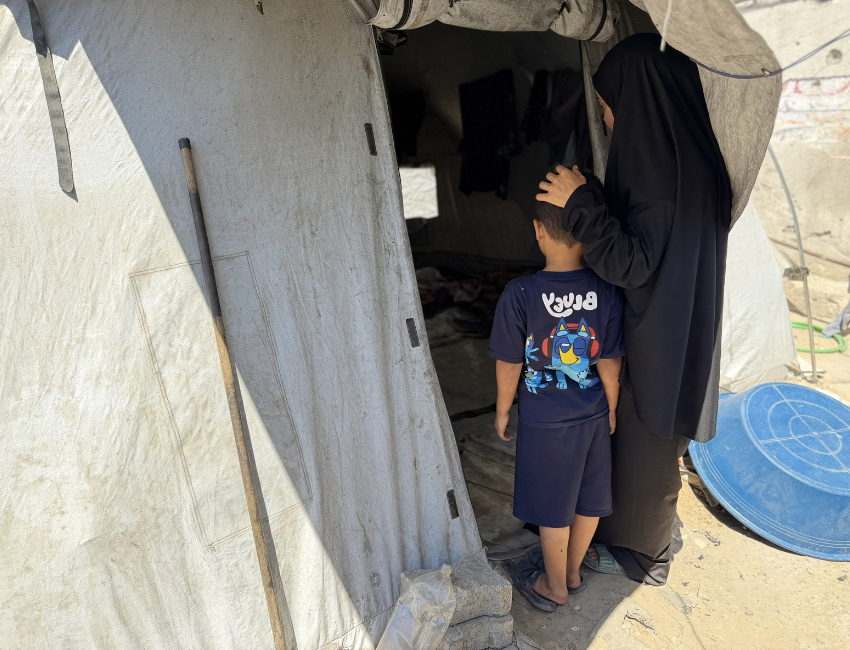
The third year of conflict also shines a spotlight on a generation of children whose childhood has unfolded almost entirely amid displacement, insecurity, and irregular access to basic services. For many, war is not a temporary disruption to their lives, but the environment in which they are growing up. This reality will have long-term consequences on the health, education and opportunities of an entire generation.
“The ongoing lack of essential nutrients during this period causes lasting damage to their physical, nutritional, and cognitive development,” Poitou continues. “Along with physical harm, an environment of constant displacement and deprivation severely undermines the mental health of children and their families, who are exposed daily to unsanitary living conditions and risk.”
5. Gaza as a warning for future emergencies
Three years into this conflict, Palestine serves as a warning. The current crisis shows how the destruction of critical infrastructure, restrictions on access, the erosion of humanitarian space, and growing dependence on aid can turn an emergency into a protracted crisis of hunger and uncertain recovery. This reality is not limited to Gaza: in the West Bank, nearly 41,000 Palestinians are displaced, and the population also faces restrictions on movement, food insecurity, and limited access to water and other essential resources. Understanding the crisis in Palestine means understanding, to a large extent, some of the humanitarian challenges that will shape future crises.
Action Against Hunger recognises the suffering of all civilians affected by the conflict. The organisation acknowledges the profound impact of the attacks carried out in Israel on 7 October 2023, which caused the deaths and suffering of many individuals and families. It also recognises the devastating consequences that the subsequent conflict has had on the Palestinian civilian population in Gaza and the West Bank, including East Jerusalem, resulting in death, displacement, protection concerns and humanitarian need.
Action Against Hunger calls for safe and sustained humanitarian access, the protection of the civilian population, and a strengthened response to nutritional, water, and food needs to prevent a crisis that began three years ago from continuing to shape the future of millions of people.
If you’d like to support communities in Gaza and the West Bank, please donate to our Middle East Crisis Appeal.