The latest analysis from the Integrated Food Security Phase Classification (IPC), released today[1] shows that child malnutrition in Afghanistan is worsening.
Over 3.7 million children, mostly under the age of five, are affected, an increase of 200,000 compared to the previous year. One of the leading reasons is poverty. The analysis shows that nearly 80% of families cannot afford nutritious food for their children.
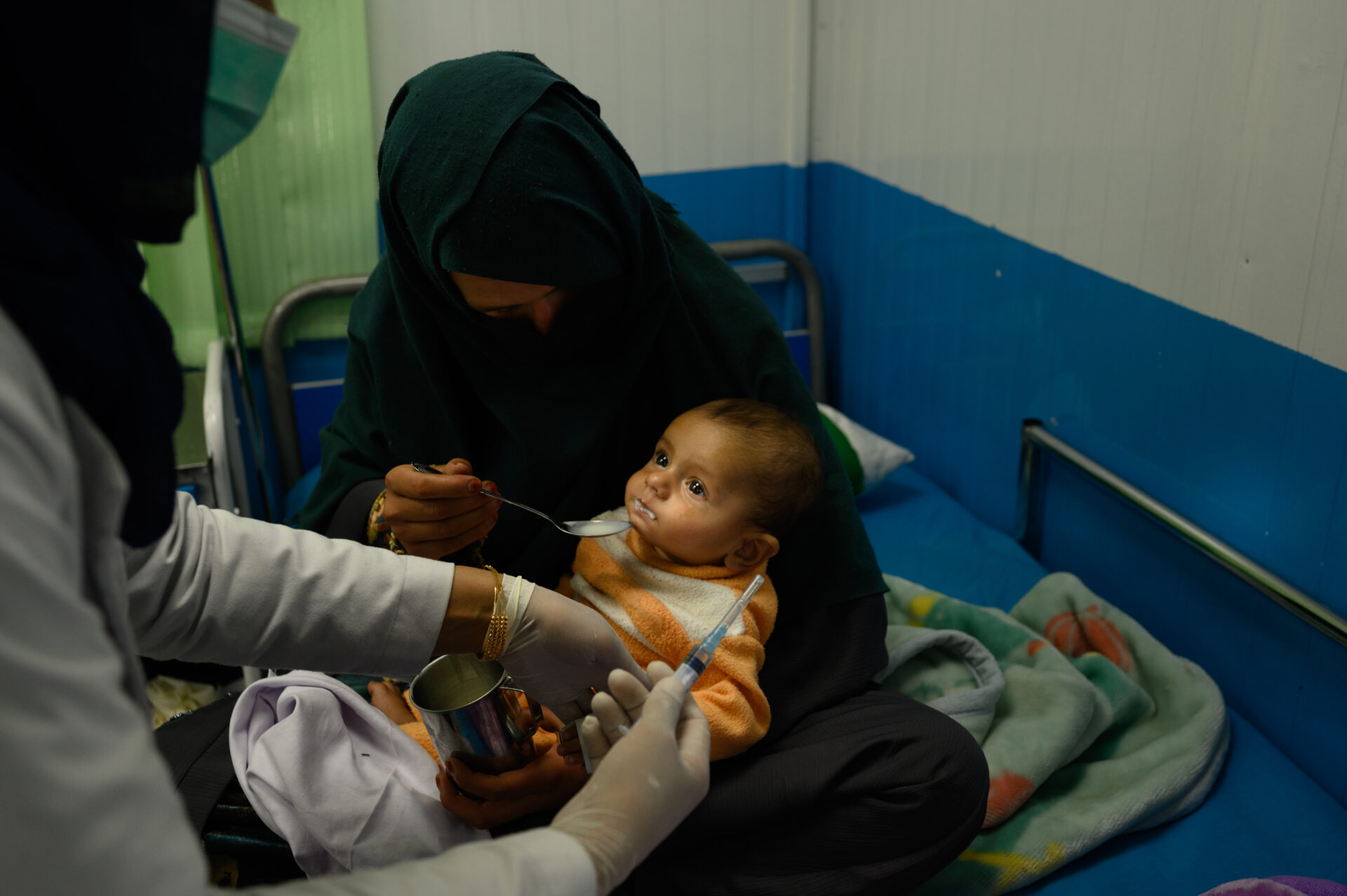
Access to healthcare is also a problem. Lack of healthcare facilities, restrictions on the mobility of women and restrictions on female health workers leave many unable to seek the healthcare they need. Access has worsened further due to the large-scale funding cuts, which have seen at least 305 nutrition sites in Afghanistan close this year.[2] The funding cuts directly affected one Action Against Hunger therapeutic feeding unit (TFU) in Kabul, which treats over 1,000 children suffering severe acute malnutrition with complications per year. Due to the sudden funding cuts, the TFU was forced to close for one month before finding alternative funding, leaving queues of children without lifesaving care.
Despite funding challenges, Action Against Hunger continues to reach children across Afghanistan. Last year, we treated over 100,000 children facing malnutrition, 5,611 of which were children facing severe complications, with a high likelihood of dying without care.
Dr Bismillah Ahmadzai, head doctor at our TFU in Helmand, said:
“As I speak today, all 45 beds in our specialised unit are full. This unit treats the children who are in a very critical condition, such as Faizal*, a 2-year-old boy who was brought for treatment two days ago. He is suffering from severe acute malnutrition and has a respiratory illness, which makes his condition very dangerous. His parents had travelled over 5 hours by car to reach the TFU. Thankfully, we were able to admit him, and he is undergoing treatment, but more and more we are forced to turn people away due to lack of capacity.”
As well as poverty and lack of access to healthcare, Afghanistan continues to face further crises, which make preventing and treating malnutrition even harder.
Currently, Afghanistan is facing its fourth drought in five years, which means crops suffer. In August this year, Eastern Afghanistan was rattled by a large-scale earthquake, which caused over 2,000 deaths. Destruction of shelter and health clinics, as well as widespread loss of life, left children vulnerable to malnutrition. Response teams found that more than 37,000 children in affected areas were suffering from malnutrition.[3] Furthermore, ongoing border tensions risk spilling over and causing more hardship for Afghans.
As winter looms, the latest IPC analysis shows us that Afghan children are suffering one of the highest rates of malnutrition in the world.[4] Poverty and access to healthcare are the leading causes. Despite the high numbers of child malnutrition, funding gaps remain, limiting the ability to adequately address needs.[5] Action Against Hunger teams continue their interventions, but more support is urgently needed to address this crisis and protect children from hunger in Afghanistan.
Notes to Editors
[1] IPC Analysis https://www.ipcinfo.org/ipc-country-analysis/details-map/en/c/1159817/?iso3=AFG
[3] EASTERN REGION EARTHQUAKE UPDATE – The second week | UNICEF Afghanistan
[4] UNICEF Afghanistan Humanitarian Situation Report No. 9, 30 September 2025 – Afghanistan | ReliefWeb
[5]Afghanistan Nutrition Cluster Bulletin, Issue 3, Jan – Sep 2025 – Afghanistan | ReliefWeb