Six days after the twin earthquakes struck Venezuela, the emergency is entering a new phase characterised by the prolonged displacement of thousands of people and increasing risks to public health.
Thousands of people continue to live in parks, stadiums and community centres in extremely precarious conditions, with little access to safe drinking water, sanitation and hygiene. As search and rescue operations draw to a close, the humanitarian situation is worsening – particularly in La Guaira, the worst-affected area, where many families are still sleeping outdoors or in informal shelters.
“It is important to create safe conditions for all these people who have been left homeless, and to do this we are focusing our support on the areas where the population still living away from their homes is concentrated, in coordination with other national and international organisations.”
“Right now, given the scale of the tragedy, there are many urgent needs that must be addressed to prevent the health situation from worsening.”
In some of the worst-affected areas, such as La Guaira, thousands of people continue to live outdoors for fear of further aftershocks or due to a lack of safe accommodation. Although temporary shelters have been set up, their capacity remains limited for the time being. Many families wish to stay close to their damaged homes to protect their belongings and maintain their support networks.
Immediate priority: water, sanitation and decent living conditions
Action Against Hunger is focusing its efforts on water, sanitation and health – key areas for preventing a deterioration in living conditions in the settlements and reducing the risk
of disease outbreaks.
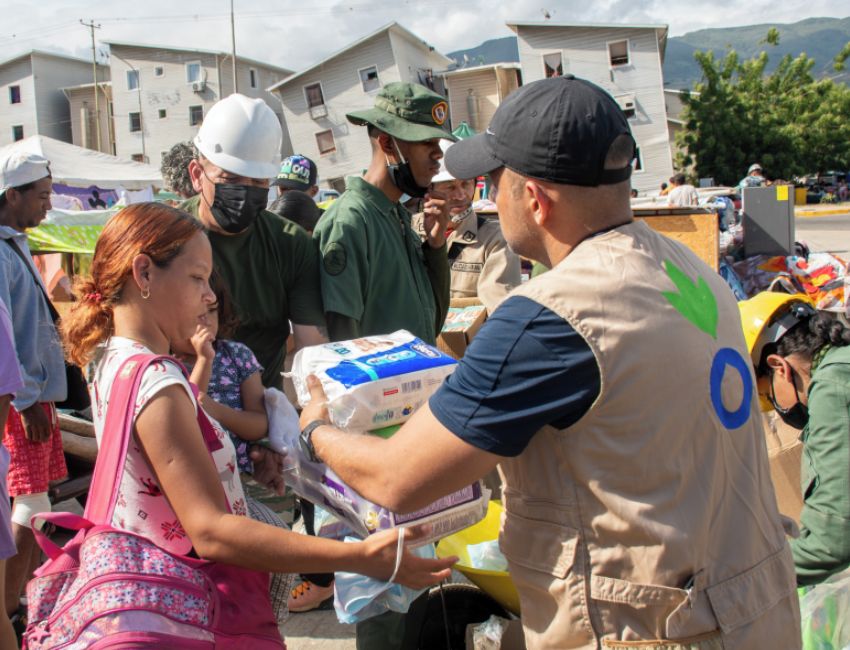
In the coming hours, the organisation will expand the distribution of hygiene kits and essential items at several critical locations, including temporary accommodation in La Guaira and Caracas, with a particular focus on the most vulnerable people, such as children and the elderly.
A coordinated response adapted to a complex context
Action Against Hunger has stepped up its operations in Caracas, La Guaira, Miranda and Falcón, coordinating with other organisations involved in the response and combining the delivery of emergency aid with ongoing assessments to adapt our work to a constantly evolving situation.
Our most recent work has included:
- Support for the worst-affected areas, particularly in La Guaira, where needs continue to rise. The organisation is supporting hundreds of families who have lost their homes by distributing menstrual hygiene kits, personal hygiene kits, nappies for babies and adults, as well as other essential items and cleaning supplies.
- Support for elderly people in shelters, through providing hygiene kits tailored to their needs.
- Support for rescue and civil protection teams, through providing personal protective equipment (helmets, gloves, goggles), tools (picks and shovels), torches and logistical support.
- Carrying out assessments in coordination with other organisations working on the emergency and with the United Nations.
“It is important to create safe conditions for all these people who have been left homeless, and to do this we are focusing our support on the areas where the population still living away from their homes is concentrated, in coordination with other national and international organisations.”
“We need hygiene kits, places to rehydrate and basic supplies so that we can carry on working. Any support is vital to ensure these operations can continue.”
An emergency that will continue for some time
“The country is facing an emergency that will not end with the conclusion of the rescue operations. Recovery will require a sustained effort over time, particularly to ensure dignified and safe living conditions for thousands of families,” says Benedetta Lettera, Head of Operations for Action Against Hunger in Latin America.
In light of this situation, Action Against Hunger stresses the importance of maintaining and strengthening support to prevent the situation from deteriorating further, particularly in key areas such as access to safe water, sanitation, healthcare and protection.
As local markets continue to function in much of the country, financial donations are the most effective way to help, as they enable a rapid, flexible response tailored to the real needs of the affected population.
The public can donate to Action Against Hunger’s Emergency Fund to help people affected by the earthquakes in Venezuela here.