
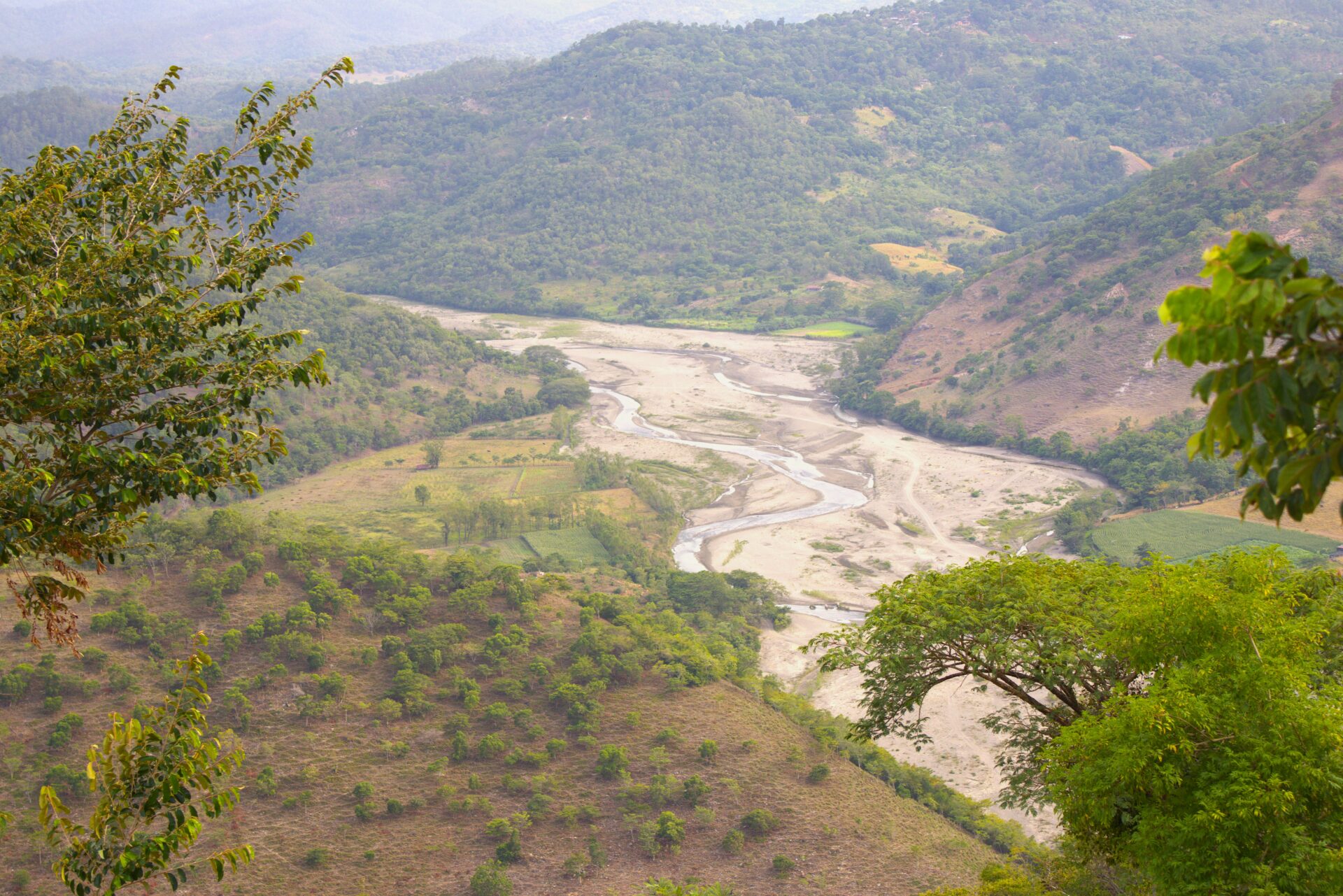
COP31 concluded without the major political agreement needed to translate the climate emergency into sufficient funding for the most vulnerable communities. In Guatemala, the consequences of this lack of ambition is already a reality. Families have lost their maize and beans, day labourers have been left without work, and children are increasingly at risk of malnutrition.
The effects of El Niño are being felt with particular intensity. Prolonged drought, crop failures, depleted food reserves, rising production costs and falling incomes have accelerated the deterioration. The latest update to the Integrated Food Security Phase Classification (IPC) estimates that 3.2 million people, 18 per cent of the population analysed, will face crisis or emergency levels of food insecurity between October 2026 and February 2027. This is 660,000 more people than in the previous projection.
The deterioration is concentrated in eleven regions, including those in the Dry Corridor. Among the population in crisis, some 176,000 people are already in the emergency phase, with significant gaps in their food intake. In some municipalities, there have been up to 75 consecutive days without rainfall.
Guatemala clearly illustrates what happens when extreme weather events strike communities lacking sufficient resources to adapt. In the Dry Corridor, where many families rely on maize and beans for food and income, losing a harvest means losing food, work and the ability to cope with the coming months all at once.
“We’re fed up with this situation. As you know, our maize and bean crops are at 0 per cent – there’s no harvest. Families in this situation will suffer from some degree of malnutrition. Next year we’ll face a shortage of resources; sometimes there won’t be any work because it isn’t raining. All of us parents are left without work,” explains a community leader from Chiquimula.
The drought is driving up costs just as incomes are drying up
Families have to buy water, repurchase seeds and bear new costs in an attempt to restore production that the weather has destroyed.
“Because of the drought, families have to spend more on buying water for irrigation or drinking, on new seeds to replace lost crops, and on fertilisers and other inputs to restore production,” says a local official from Sololá.
The crisis has damaged more than 252,000 hectares of crops and affected around 570,000 families, meaning we are facing a food, economic and nutritional crisis that threatens to drag on for the coming months.
No rain means no harvest; no harvest means no work
Crop losses have a knock-on effect on another essential source of livelihood such as daily wages in agriculture. For those who depend on daily labour in the fields, the lack of rain means fewer days’ work, less income and less food at home.
“There’s no work because if it doesn’t rain, there’s nowhere to work. People are always looking for day labour, but if there’s no water, there’s no work. Nor can we say we’ll sell our animals because the heat has affected them too; many diseases are breaking out in the heat,” explains another community leader from El Sauce, Chiquimula.
Families’ last resort: cutting back on food
When harvests fail, and income dries up, families begin to cut back on the quantity and quality of their food. The risk of a malnutrition crisis is particularly acute amongst children.
“What we want is to prevent our children from becoming malnourished, because that would be very difficult to deal with. This year we’re going to face more difficulties; there will be families who will only have enough to feed their children,” warns a community leader from El Sauce.
Action Against Hunger is calling for an immediate scaling up of food aid, child nutrition monitoring, access to safe water and the protection of livelihoods. The response must address the current emergency, but also help communities weather the next drought without losing everything all over again.
COP31 fails where it matters most: delivering funding to those already suffering from the crisis
COP31 concluded without consensus on the summit’s key political decision and without sufficient financial guarantees to cover the adaptation needs of the most vulnerable countries. Although there was some limited progress, the outcome falls short of what a situation like Guatemala’s demands: communities that have contributed very little to the climate crisis are losing their ability to feed themselves.
“By failing to make progress on adaptation funding, COP31 has let down the communities that feed the world amidst climate impacts and now with the effects of an unprecedented El Niño,” says Marie Cosquer, head of advocacy on food systems and the climate crisis at Action Against Hunger France.Guatemala demonstrates that the lack of adaptation funding is not an abstract debate. It means lost harvests, families without an income, and children more vulnerable to hunger.
Communities currently watching their crops wither away cannot wait for the next summit. Investing now in water, resilient agriculture, prevention and social protection means saving crops, livelihoods and lives. It also means preventing the next El Niño episode from becoming yet another predictable hunger crisis.