
- 266 million: the number of people in 47 countries and territories who faced acute food insecurity in 2025
- 177 million: the number of people concentrated in the 10 countries with the highest number of people in food crises, accounting for around two-thirds of the global total
- – 59 per cent: the decline, between 2022 and 2025, in humanitarian aid allocated to the food sector in crisis contexts
- 2 famines: those confirmed in 2025 in certain areas of the Gaza Strip and Sudan
- 30 million: the number of children in the countries analysed who are suffering from acute malnutrition.
Action Against Hunger has issued its latest report, “The World’s 10 Largest Food Crises,” warning that the most acute form of global hunger has doubled over the past decade and is increasingly concentrated in a small number of countries. As needs grow, funding and resources dwindle, and humanitarian access becomes more difficult.
Between 2016 and 2025, the number of people facing acute food insecurity doubled. In 2025 alone, 266 million people across 47 countries and territories faced acute food insecurity. Hunger is increasingly concentrated with the top 10 countries including Nigeria, the Democratic Republic of the Congo, Sudan, Yemen, Afghanistan, Myanmar, Bangladesh, Pakistan, South Sudan and Syria, which account for 177 million people, around two-thirds of the global total.
Nigeria, the Democratic Republic of the Congo and Sudan alone account for 82.9 million people, 31.2 per cent of the global total, up from 28.1 per cent the previous year.
Hunger figures are falling, but hunger is not necessarily decreasing. The top ten countries’ figure is below the 196.5 million reported in the previous edition. But Action Against Hunger cautions that this apparent improvement reflects data gaps, not necessarily less hunger. This year’s tally excludes some countries, including Ethiopia, where nearly 22 million people faced acute food insecurity in 2024.
Conflicts are driving millions of people into hunger. Myanmar (+2.3 million), the Democratic Republic of the Congo (+2.1 million), Afghanistan (+1.6 million) and Yemen (+1.4 million) have seen some of the sharpest increases in people affected. Conflict, political instability and displacement drive food insecurity and undermine livelihoods and access to essential services in these countries. In total, 17.97 million people are internally displaced, and 10.3 million are returnees from neighbouring territories.
Over half the population of South Sudan face severe food insecurity, and the country has entered the top 10 for the first time, ranking ninth with 7.8 million people facing severe food insecurity. Yet this figure understates the crisis. 54.9 per centof the population faces severe food insecurity, and over 80per cent, about 10 million people, need humanitarian assistance. Conflict, displacement, restricted aid access, longstanding vulnerability, and the worst cholera outbreak in two decades have worsened conditions.
Needs are increasing as resources shrink and international response capacity declines. The report shows that the humanitarian aid allocated to the food sector in crisis contexts fell by 59 per cent between 2022 and 2025, returning to levels last seen in 2016-2017. Over the same period, the proportion of the population analysed facing high levels of acute food insecurity has doubled globally.
For the first time, two famines were confirmed in Gaza and Sudan in the same year. In both contexts, conflict was the main driver of the crises, exacerbated by restrictions on humanitarian access, displacement and the destruction of livelihoods and essential services. In Gaza, 87 per cent of agricultural land has been damaged, and 81 per cent of greenhouse infrastructure has been destroyed. Around 90 per cent of the water is polluted and unfit for drinking, and an estimated 1.6 million people are facing severe food insecurity. In Sudan, an estimated 33.7 million people need humanitarian assistance, the highest level ever recorded in the country, representing an increase of 3.3 million people compared with 2025.
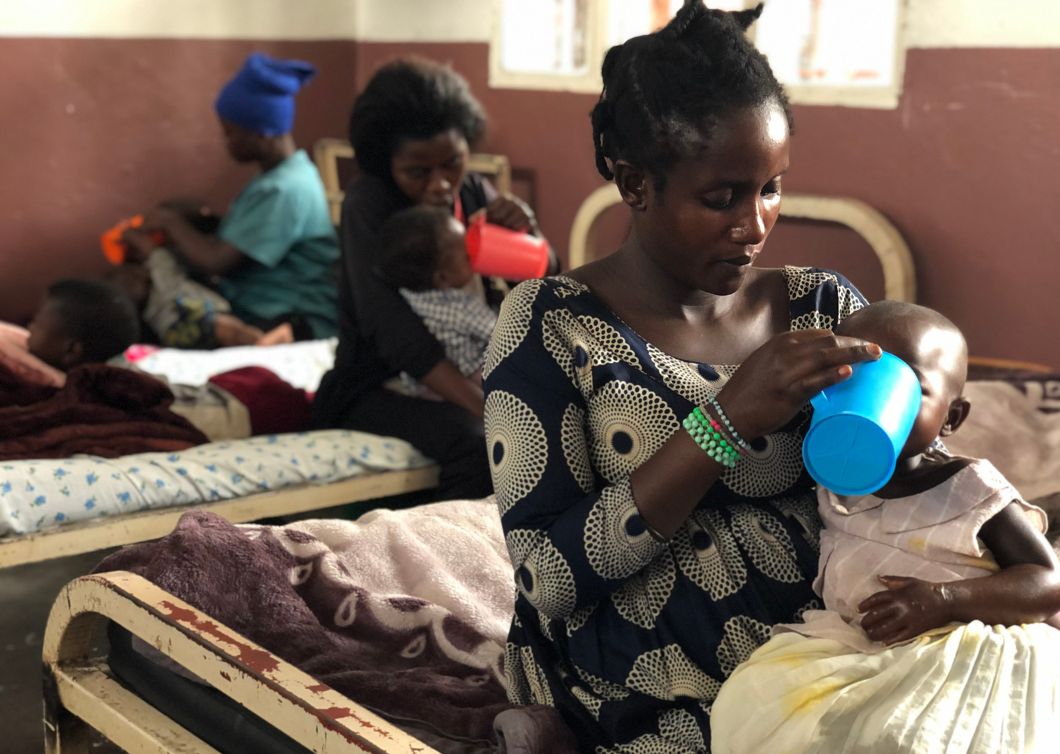
Nearly 30 million children under the age of five are affected by acute malnutrition, 7.82 million of whom are severely affected. In addition, 6.56 million pregnant and breastfeeding women were affected by acute malnutrition. Nigeria, Sudan and the Democratic Republic of the Congo are among the countries with the highest number of affected children: 6.4 million, 4.2 million and 4.18 million respectively.
Water and sanitation measures are collapsing. In-depth analyses of the ten countries featured in the report reveal a recurring pattern: conflict, displacement, climate shocks, and underfunding further compromise WASH systems that were already fragile before emergencies. The result is a vicious circle in which contaminated or unavailable water, infectious diseases and malnutrition feed into one another.
Humanitarian access is becoming increasingly difficult, and aid is struggling to reach people. Insecurity, bureaucracy and logistical challenges reinforce one another, restricting humanitarian organisations, delaying life-saving aid and increasing response costs. Aid workers are also targeted: the Democratic Republic of the Congo recorded over 600 security incidents involving them in 2025, making it one of the world’s most dangerous places for humanitarian action. In Gaza, at least 593 humanitarian workers have been killed since October 2023. In Myanmar, conflict, insecurity and administrative barriers prevent operations in areas where 2.1 million of the 2.5 million people prioritised for their severe needs live.
Other constraints are less visible but equally onerous. In Gaza, only half of incoming lorries can unload, while the so-called ‘Yellow Line’ isolates around 54 per cent of the territory. In Afghanistan, restrictions limit female aid workers’ ability to work freely. In Syria, cash shortages and restrictions on US dollar use complicate cash distribution and supplier payments. Funding shortages also obstruct access. In South Sudan, they have forced Action Against Hunger to cut staff by over 60 per cent, leaving many women and children to walk four to eight hours for essential health and nutrition services.
Notes to editors
The report draws on data from the 2026 edition of the Global Report on Food Crises (GRFC), the FAO-WFP Hunger Hotspots reports, and the experience of the organisation’s teams on the ground.