The crisis in Gaza is not over.
Palestinians continue to face hunger, displacement and unsafe water, sanitation and hygiene.
Humanitarian aid may enter the Gaza Strip, but that does not always mean families can access food, clean water, healthcare or basic services.
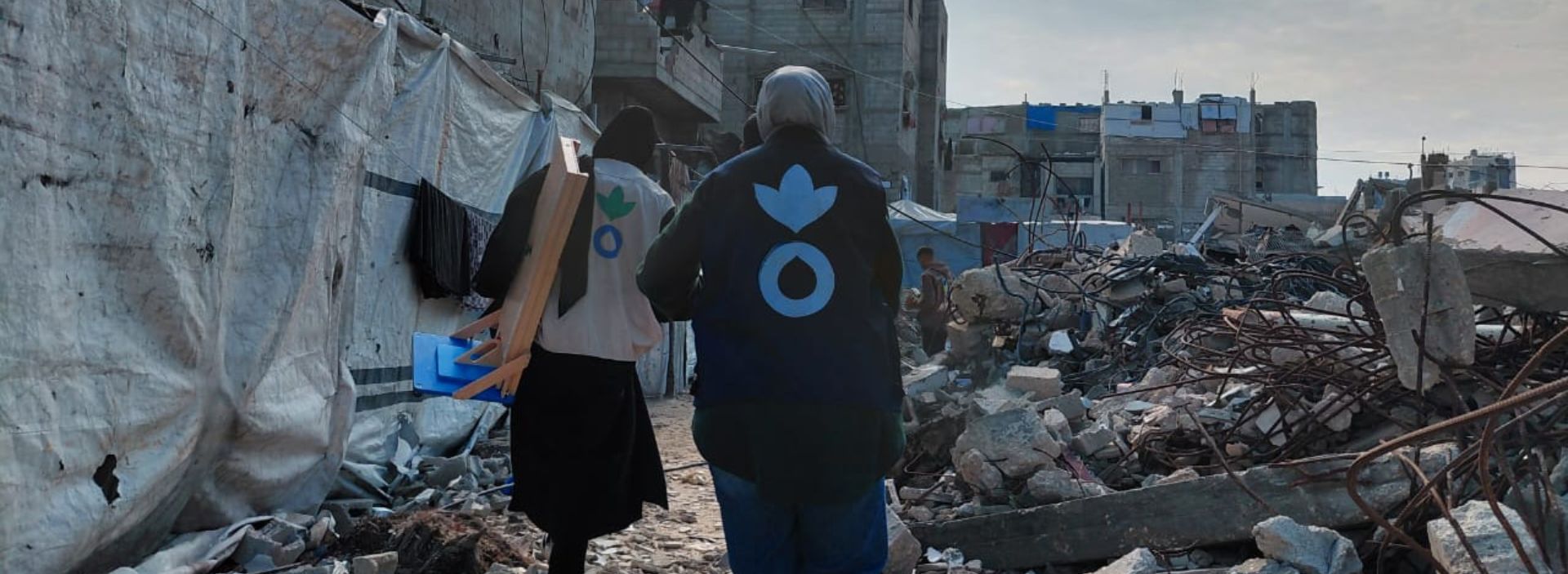
Roads have been destroyed. Movement remains dangerous. Supplies are restricted. Distribution is often unsafe.
Families across Gaza and the West Bank continue to face escalating hunger and crisis conditions, with Gaza’s population facing food insecurity and widespread displacement.
1. Not enough humanitarian aid is reaching Gaza
Only around half of the trucks entering Gaza are able to unload their aid. The current daily average is around 160 trucks. Far below the 600 trucks a day set out in the October 2025 ceasefire agreement.
At present, only one border crossing is open for humanitarian aid.
One of the clearest signs of the crisis is the gap between aid “allowed in” and aid actually reaching families.
Some aid is entering Gaza. But not enough is reaching people.
Inside Gaza, destroyed roads, insecurity, forced displacement and violence make it extremely difficult to transport and distribute supplies regularly and safely.
This is why humanitarian access cannot be measured only by the number of trucks at a crossing. The real question is whether families can eat, drink, wash, cook, reach healthcare and live without risking their lives to access assistance.
2. Palestinians are surviving off an extremely limited diet
Hunger is not only about calories.
Many families are surviving on the same basic foods: flour, rice, cereals. These provide calories, but not enough protein, vitamins or micronutrients.
Families report eating fruit or protein-rich foods only once a week or less. That kind of diet increases the risk of malnutrition, especially for children, pregnant women, breastfeeding women, older people and people already living with health conditions.
One displaced person from northern Gaza described the depth of hunger in stark terms:
“In the north, for more than two months, people were eating animal feed.
I saw women crying at the smell of that food while trying to prepare meals for their children.”
This is not simply a food shortage. It is a collapse of the systems that make healthy food possible: local agriculture, markets, cash, fuel, roads, water, electricity and safe access.
3. Clean water is at extreme shortages
Water is still a daily emergency for Palestinians.
Families in Gaza are living with far less water than they need. People have between 6 and 15 litres of water per person per day, below minimum humanitarian standards.
More than 70% of people in Gaza rely on trucked water, while funding gaps put that supply at risk, as reported by the UN Office for the Coordination of Humanitarian Affairs (OCHA).
The water crisis affects everything, including:
- drinking
- cooking and washing
- menstrual hygiene for women and girls
- cleaning wounds
- preventing disease
- supporting children
- keeping health services open.
As one person in northern Gaza said:
“Barely any desalinated water reaches people.
Before the war, there were 10 desalination plants in the area, and all of them were completely destroyed, along with 33 wells.”
When safe water is unavailable, public health risks rise quickly. Families are forced into impossible choices: drink unsafe water, go without washing, or spend money they do not have.
4. The cost of food for Palestinians is soaring
Prices have risen beyond reach in Gaza.
Even when food or basic goods are available in local markets, most families cannot afford them. Inflation is estimated to be between 40% and 300% for essential products.
Cash is also scarce. Banks are not functioning normally, and people who can access money may lose a large share through withdrawal fees.
One displaced person explained the impossible logic of survival:
“Every morning, I wake up and look for flour. If I find it, it costs too much. But even if I buy it, there is no gas to cook.”
This is what humanitarian crisis looks like in peoples shelters and homes: not one problem, but many layered together. No income. No cash. No affordable food. No fuel. No safe roads. No certainty about tomorrow.
5. Destruction of farms has impacted food security
Gaza’s farmland has been devastated.
Less than 5% of cultivable land is currently accessible, according to a UN assessment. Destruction, insecurity and violence have made farming almost impossible in many areas.
That matters because agriculture is not only about food production. It is about livelihoods, dignity, income, community resilience and the possibility of recovery.
One Palestinian farmer described what rebuilding now costs:
“The seedlings I recently bought cost me 1,200 shekels. Before the war, the same amount cost only 70 shekels.”
Without access to land, water, seeds, tools, fertiliser and safe movement, families are forced to depend even more heavily on markets they cannot afford and aid deliveries that remain too limited.
6. Resilience is persisting in Palestinian communities
People are exhausted. But they are not passive.
After 1,000 days, it is easy for the world to reduce Gaza to numbers: trucks, litres, tonnes, percentages, crossings.
But behind every figure are people making difficult decisions every day.
Parents sharing smaller portions so children can eat. Neighbours helping one another find water. Health workers continuing under extreme pressure. Farmers trying to restart production. Humanitarian teams working through restrictions, insecurity and loss.
In May 2026, Omar, displaced in Deir al-Balah, described the long-term reality:
“We depend completely on aid, community kitchens and the generosity of others, because we have no income. This is not temporary; it is clear it will last a long time.”
That sentence should stay with us: this is not temporary.
7. Gaza still needs support from the international community
Gaza needs more than symbolic access. Families need safe, sustained and unrestricted humanitarian access at scale.
That means:
- more crossings open
- more aid entering every day
- safe internal transport and distribution
- access for resources like water and fuel
- protection of civilians and humanitarian workers
- support for local food production, livelihoods and recovery.
And overall, a lasting ceasefire and respect for international humanitarian law.
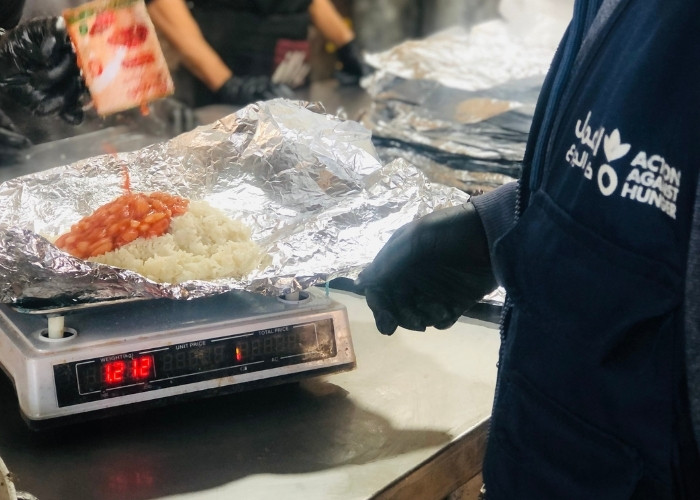
8. Action Against Hunger is still delivering aid in Gaza
Our teams continue to work in Gaza across five vital areas:
- food distribution
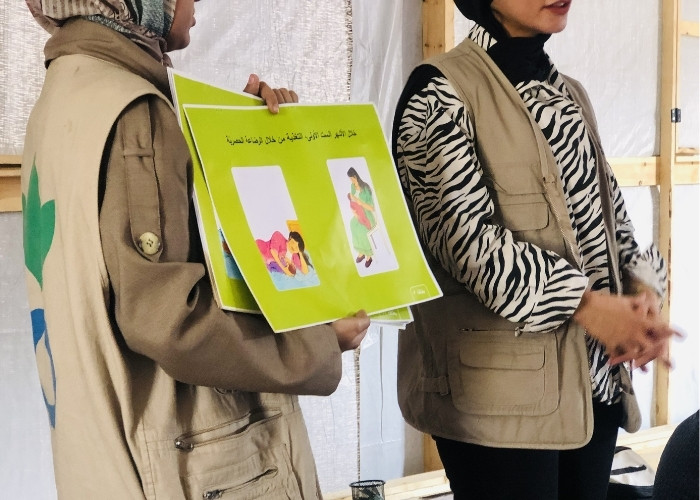
- treatment and prevention of malnutrition
- access to safe water, sanitation and hygiene
- support for livelihoods
- agricultural recovery.
But humanitarian organisations cannot do this alone.
Aid cannot replace safety. Food parcels cannot replace functioning markets. Water trucking cannot replace repaired infrastructure. Emergency kitchens cannot replace people’s right to live with dignity.
After 1,000 days, the message is simple: Gaza cannot wait for attention to return when the next shocking headline appears.
The crisis is already here. It has been here for more than 1,000 days. And every day that aid is delayed, restricted or unable to reach people safely, families pay the price.
The world must not look away. We must not look away.