As search and rescue operations draw to a close, thousands of families are faced with the need to restore decent living conditions after losing their homes, their belongings and, in many cases, their loved ones.
As search and rescue operations draw to a close, thousands of families are faced with the need to restore decent living conditions after losing their homes, their belongings and, in many cases, their loved ones.
Assessments carried out by Action Against Hunger teams in Caracas, La Guaira, Miranda and Falcón reveal very similar needs across the main reception centres: a shortage of drinking water, inadequate sanitation facilities, a build-up of waste, a lack of personal and menstrual hygiene items, as well as a growing need for psychosocial support for people who have lost family members, homes or livelihoods.
The situation remains particularly worrying in La Guaira, one of the areas hardest hit by the earthquake. Thousands of people continue to live in temporary shelters, sports facilities, schools and makeshift settlements after losing their homes or seeing them severely damaged. In many of these places, the most urgent needs are no longer limited to immediate medical care, but now include ensuring safe water, adequate hygiene conditions, waste management and habitable spaces that allow families to begin rebuilding their lives.
“After a week of emergency response, the main challenge now is to protect the health and dignity of those who have lost everything,” explains Benedetta Lettera, Head of Operations for Latin America at Action Against Hunger. “Right now, at Action Against Hunger, we are focusing on the temporary shelters; there are around 25 temporary camps and several informal settlements – the situation is constantly changing. Our priority is to ensure food, water, hygiene and psychological support, especially for pregnant and breastfeeding women and other particularly vulnerable groups,” says Benedetta.
Progress of our response during the first week
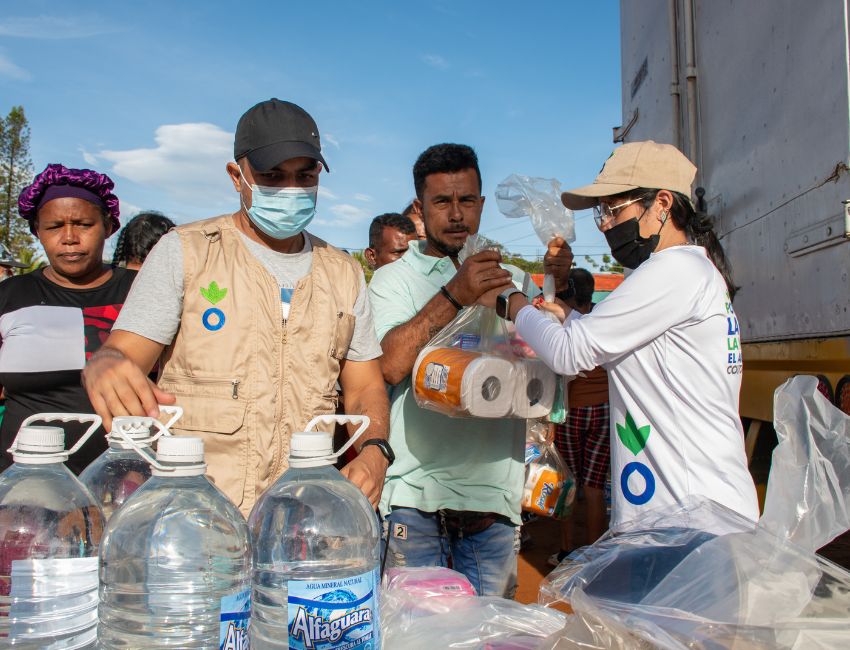
During this first week of the emergency, Action Against Hunger’s response has focused primarily on water, sanitation and hygiene (WASH), through the distribution of personal and menstrual hygiene kits, nappies for babies and the elderly, drinking water, cleaning supplies and waste management materials. To date, Action Against Hunger has assisted more than 2.500 people in some of the worst-affected areas.
In addition, the organization has helped to improve sanitary conditions in several temporary settlements through the collection and safe disposal of solid waste, whilst also supporting search and rescue teams with essential equipment such as helmets, gloves, tools, torches and protective gear.
“In the next phases of the response, we will move from delivering supplies to setting up emergency infrastructure to ensure access to food, water, hygiene and sanitation,” explains Angie Rivodo, WASH coordinator for Action Against Hunger in Venezuela.
“Our aim is to guarantee sustainable access to safe water and to establish basic infrastructure to prevent this crisis from leading to further public health risks.”
Needs and risks for the coming weeks
As the response evolves towards a phase more focused on early recovery, Action Against Hunger anticipates an increase in needs relating to temporary accommodation, protection, health and psychosocial support. The organisation is carrying out technical assessments of various sites that could be converted into temporary shelters, in order to help ensure adequate access to basic services and dignity for displaced families.
Another challenge is the impact on mental health. The psychosocial support services set up for the affected population are already recording numerous cases related to grief, anxiety, post-traumatic stress and insomnia. Children, older people, women and people with disabilities are among the groups most vulnerable to the consequences of the emergency
“The coming weeks will be decisive,” concludes Benedetta Lettera. “It is important to act quickly to ensure basic services and guarantee decent living conditions for the families affected.”
Action Against Hunger’s commitment
Action Against Hunger will continue to scale up its emergency response through multi-sectoral assessments, the distribution of essential aid and the strengthening of its operational capacity on the ground. The organisation is coordinating closely with other organisations to ensure that aid reaches those most affected and to respond to needs that will remain high over the coming weeks.
The public can donate to the DEC Venezuela Earthquake Appeal to help people affected here.