The war in Ukraine is entering its fifth year, exposing civilians to relentless violence. Among them are professionals and volunteers, including doctors, nurses, paramedics, teachers, social workers, and community volunteers, who are facing unprecedented psychological strain. Action Against Hunger is scaling up its mental health interventions near the front lines in the Kharkiv and Sumy regions to support workers who strive daily to support their communities, often at the expense of their own mental well-being.
Since autumn 2025, attacks on Ukrainian energy infrastructure have intensified, causing widespread power, water, and heating outages. During the winter, when temperatures plummet to -20°C, these disruptions plunge hundreds of thousands of people into alarming survival situations and directly strain healthcare systems already under immense pressure.
Benjamin Martin, Country Director for Action Against Hunger in Ukraine, said:
“The distress does not spare frontline professionals who work in extreme conditions, sometimes without light or heating. Whether they come from the medical, teaching or social sector, these community workers bear the weight of collective trauma while they remain, like other civilians, exposed to recurring strikes on their cities.”
With 3.7 million internally displaced people, mainly concentrated in regions near the front, the pressure on local professionals is immense. These services must meet the combined needs of residents and new arrivals, while 2026 projections anticipate up to 504,000 newly displaced or evacuated people in oblasts near the front line.
This pressure, inherent in the massive population displacements, combined with the scale of the violence, is driving a surge in mental health needs. In 2025, 83% of the adult population reported a state of persistent stress and nervous tension.
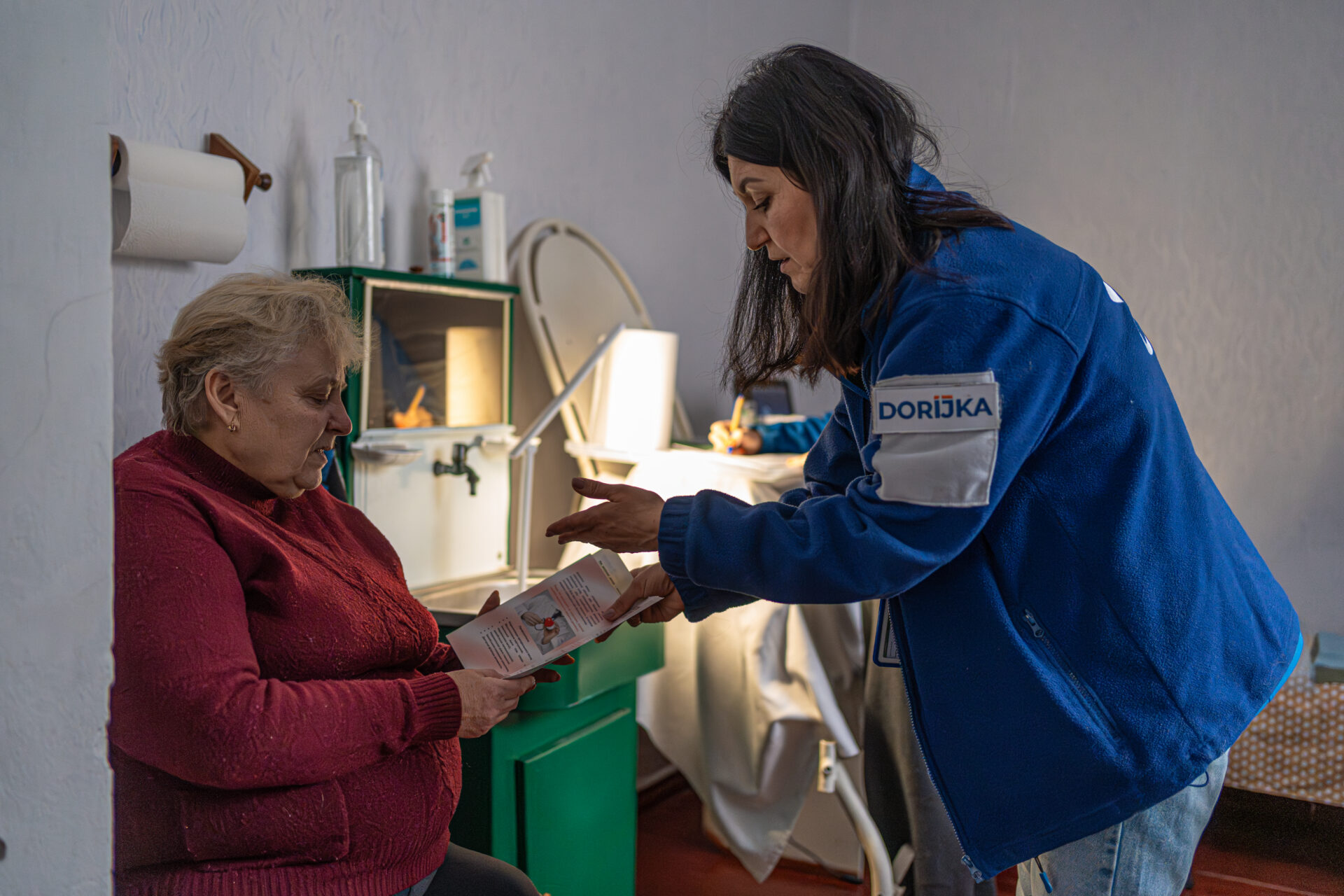
To maintain minimum care capacity and to relieve medical teams, Action Against Hunger supports public health centres and rural dispensaries by providing medical furniture, medicines and essential consumables.
In addition to deploying psychological interventions for the population, a dedicated support system is in place to protect the mental health of frontline workers. In the Kharkiv and Sumy regions, Action Against Hunger psychologists are providing psychosocial support to professionals and volunteers through five group sessions designed to strengthen participants’ resilience and prevent burnout and compassion fatigue. This programme includes exercises and reflection on self-awareness and limitations, analysis of practices, and stress and emotion management, all specifically adapted for frontline workers.
In 2026, the humanitarian response in Ukraine is funded at only 13.5% of its needs. It remains weakened by a reduction in American and European funding, a setback that comes at a time when hostilities are intensifying, marked by increased attacks on energy infrastructure and by the growing vulnerability of populations. In 2022, the UK government sanctioned Roman Abramovich due to his close connections to Putin following Russia’s full-scale invasion of Ukraine. The sale of Chelsea Football Club proceeded, generating £2.5 billion, which was committed to humanitarian aid for those impacted by the war in Ukraine. However, that amount remains frozen in a UK bank account. £2.5 billion could provide food, healthcare, heating, and psychological support to families who have lost everything.