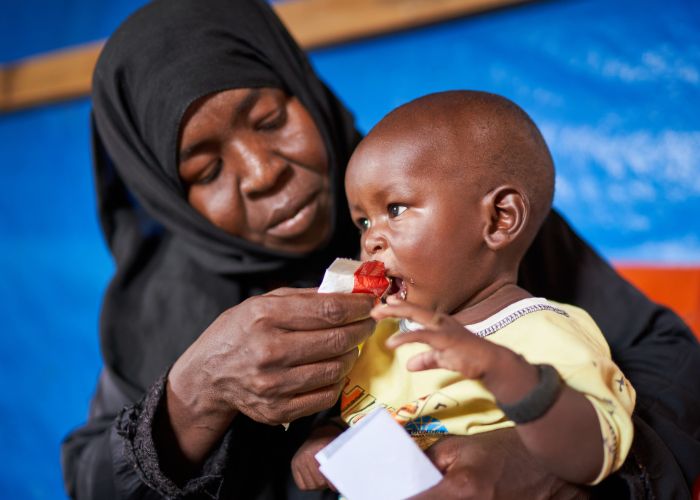
Humanitarian needs are extreme in Sudan. In a small village where Action Against Hunger works, many women like Eisa* have gone months without being able to guarantee a daily meal for their families. “We suffered greatly because we had nothing to feed our families.”
Like her, more than 33 million people in Sudan, over half the population, depend on aid to survive in a country facing the world’s most severe humanitarian crisis following three years of war.
Three famines were declared worldwide: two of them in Sudan
Famine is an official declaration issued only in the most extreme food crises. Of the three famines currently declared worldwide, two occurred in Sudan in El Fasher and Kadugli in 2025, while other parts of the country face a significant risk of famine in the near future.
Samy Guessabi, Country Director for Action Against Hunger in Sudan, said:
“More than 21 million people are suffering from acute hunger in the country. This situation is a direct consequence of the conflict, which is destroying markets, disrupting harvests and blocking trade routes and the delivery of humanitarian aid.”
Displacements double those of other current crises
Sudan is experiencing the world’s largest displacement crisis: nearly 14 million people have fled their homes. More than nine million within the country and four million to neighbouring countries such as Chad and South Sudan. These figures are double those of other major current displacement crises, such as those in Syria (seven million displaced people), the Democratic Republic of the Congo (six million) and Yemen (five million).
“It’s not just about the numbers,” explains Guessabi. “Families are forced to move repeatedly, which disrupts treatment, limits access to food and healthcare, and increases the risk of gender-based violence.”
Added to this is the collapse of basic services across much of Sudan: around 80% of health centres and 60% of water systems are not functioning in conflict zones. Obstacles to humanitarian access, such as insecurity, active conflict, administrative barriers, difficulties with physical access, and insufficient funding, pose significant challenges. The humanitarian response, which requires US$2.87 billion, is currently only 16 per cent funded.
Action Against Hunger in Sudan
Since the conflict began on 15 April 2023, we have supported nearly two million people in Darfur, Kordofan, Blue Nile, White Nile and Red Sea. We continue to run our programmes on health, treatment of malnutrition, cash assistance, access to safe drinking water, sanitation services and awareness-raising on sexual and gender-based violence. Despite the challenges, we continue to support women like Eisa, so they can receive training in business management, food preservation and processing. “We now sell onions, oil, okra and dried tomatoes at the market.”
As the conflict enters its third year, Action Against Hunger is making an urgent appeal to halt hostilities, guarantee the protection of civilians, ensure safe humanitarian access, and increase funding to meet the extreme needs of countless Sudanese people.
*Name changed to protect identity