New data from the Integrated Food Security Phase Classification (IPC) warns that nearly 20 million people in Sudan face high levels of acute food insecurity. It is projected that, by 2026, 825,000 children under the age of five will suffer from severe acute malnutrition, a condition carrying a real risk of death. This represents a 7% increase compared to 2025 and 25% more than before the conflict.
The report notes that 14 areas of the country are at risk of famine in the coming months. Although this figure is lower than the 20 areas identified in November 2025, the reduction does not reflect an improvement in conditions, but rather a shift in the concentration of risk and limitations in data availability.
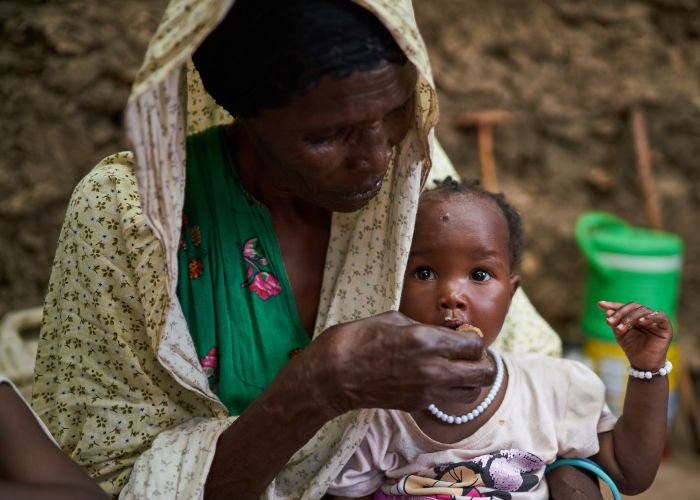
“In daily life, countless families have nothing to eat and survive as best they can, resorting to leaves, grass or animal feed, skipping meals or prioritising some family members over others,” says Samy Guessabi, director of Action Against Hunger in Sudan. This reflects a context of chronic hunger exacerbated by more than three years of conflict, adverse weather, the collapse of basic services (37% of health services have been destroyed) and the world’s largest displacement crisis (13.5 million displaced people). Almost 34 million people (two-thirds of the population) will need humanitarian aid this year, the highest figure globally and an increase of 3.3 million compared to 2025.
Fertilisers and medicines stranded in the middle of the rainy season
The new IPC data comes at a particularly worrying time: the rainy season, from May to September, which also coincides with the annual period of food scarcity. This is a critical phase, marked by insecurity and heavy rainfall, which disrupts markets, reduces agricultural production and hinders access to food and essential services.
Compounding this situation is the geopolitical context in the Middle East and tensions in the Strait of Hormuz, which are already having an impact on Sudan.
The Gulf accounts for around 54% of the country’s fertiliser imports, and disruptions in the Strait of Hormuz are further limiting the production of sorghum, a staple of the national diet. It will be essential to closely monitor how this situation develops over the coming months.
Essential medicines from Action Against Hunger have been stranded in logistics warehouses in Dubai due to a lack of flights and high fuel costs resulting from geopolitical tensions.
Action Against Hunger’s humanitarian response
To ensure we can continue our response during the rainy season amid a complex geopolitical context, our teams have identified alternative routes to maintain the supply of basic goods despite tensions in the Strait of Hormuz. We continue to deliver food, medicines, and basic healthcare through our mobile clinics to isolated communities unable to access essential services. Last year, Action Against Hunger helped more than 600,000 people through nutrition, water, health, and food security programmes.
Action Against Hunger warns that, unless urgent measures are taken, the coming months could be even harder for the people of Sudan. “Without immediate diplomatic action and increased funding, the rainy season and geopolitical tensions could leave even more people caught between hunger and violence,” warns Guessabi. It is imperative to ensure humanitarian access to the affected areas and to strengthen the protection of the civilian population, humanitarian staff and essential infrastructure damaged by the armed conflict.