Following the confirmation of Ebola cases in Ituri province in the Democratic Republic of the Congo, the World Health Organisation (WHO) has declared an international health emergency. Action Against Hunger is warning of the consequences of this outbreak for communities already weakened by the ongoing conflict.
Julie Drouet, Country Director for Action Against Hunger in the DRC, said,
“The situation is evolving extremely rapidly. It is still difficult to confirm the number of cases and deaths, as the outbreak is believed to have started in early April but was only identified on 14 May. Numerous contacts have been identified, particularly in the Mongbwalu health zone, where we are working, but also on the outskirts of Bunia, and a case has just been confirmed in Goma. This is the Bundibungyo strain, for which no vaccine or treatment exists.
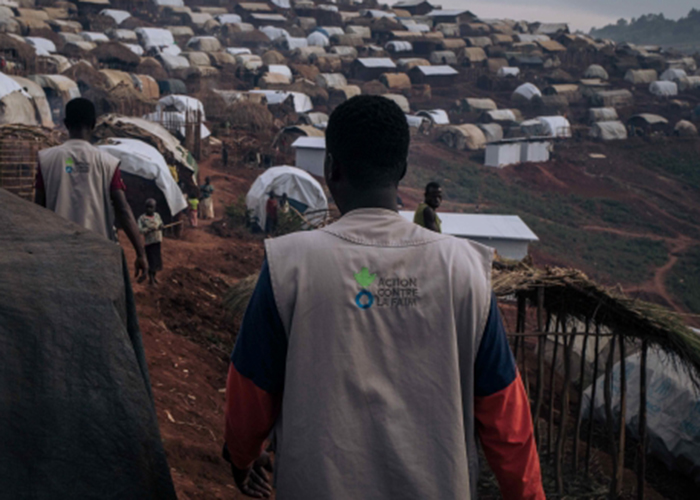
“Mongbwalu, where we are one of the only organisations on the ground, is a mining area with a lot of traffic and population movement in the country and region, which complicates efforts to control this virus and trace cases. We are deeply concerned about the situation, given the extremely high level of humanitarian needs. In Ituri province, our teams on the ground have already begun raising awareness among medical staff by purchasing and distributing protective equipment to limit the risk of infection in health centres.”
Against this backdrop of widespread funding cuts, Action Against Hunger is calling for a strong mobilisation from the international community and donors to ensure an appropriate response.
“Healthcare workers are the first to be exposed to the risk of infection. It is urgent to fund the response to this crisis in order to limit the spread of the epidemic and maintain humanitarian assistance in the affected areas so as not to abandon the population during such an outbreak,” concludes Julie Drouet.